How to Use Themed Coloring Books for Social-Emotional Learning
A practical guide to using themed coloring books for social-emotional learning in your classroom — with ready-to-print pages, prompts, and routines for K–3.
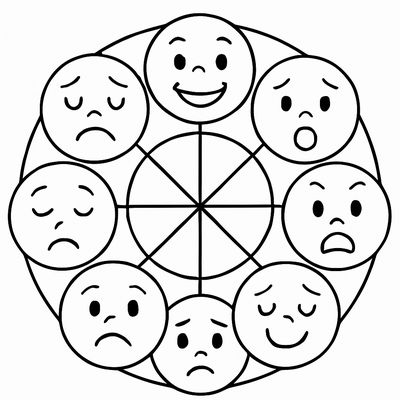
When a student is overwhelmed, the gap between "I feel something big" and "I can name it" is where most behavior incidents happen. Themed coloring books for social-emotional learning give your students a low-pressure way to bridge that gap — quiet hands, slow breathing, and a vocabulary that grows page by page. If you already run morning meetings or have a calm-down corner, the pages do the rest.
Why Themed Coloring Books Work for SEL
Social-emotional learning isn't a worksheet subject. The CASEL framework breaks SEL into five competencies — self-awareness, self-management, social awareness, relationship skills, and responsible decision-making — and notes that students build them through repeated, embedded practice. A student coloring an emotion wheel during morning arrival is naming feelings before circle time even starts.
Themed books beat random printables for one reason: continuity. A "Big Feelings" book, a "Friendship" book, a "Calm Body" book — each gives your class a shared visual vocabulary they return to all year. When a student says "I'm in the red zone today," you want a page they remember coloring last month, not a one-off worksheet.
Pick the Right Theme for Where Your Students Are
Start with what your class actually needs this month:
- Naming feelings (early year): emotion wheels, face-card pages, "feelings weather" pages.
- Self-regulation (after transitions, mid-year stress): breathing pages, calm-corner posters.
- Friendship and conflict (after a playground incident): kindness, sharing, and repair pages.
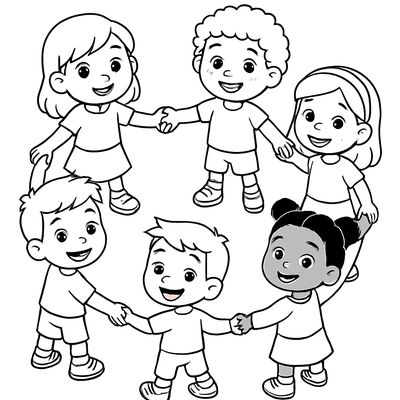
- Identity and belonging (community-building weeks): self-portrait frames and group-circle pages.
ColorNest's Feelings and Expressions library is a free hub of emotion-themed pages organized by concept. Print 4–5 that match this week's focus and you have a mini themed pack.
Three Classroom Routines That Make SEL Pages Stick
A page on its own is just a page. Pair it with a routine and it becomes practice.
Morning check-in. Place an emotion wheel at each seat: "color the feeling that matches how you walked in today." It takes 90 seconds and surfaces students who need a quiet moment. Edutopia's SEL strategies hub reinforces that small daily rituals outperform big standalone lessons.
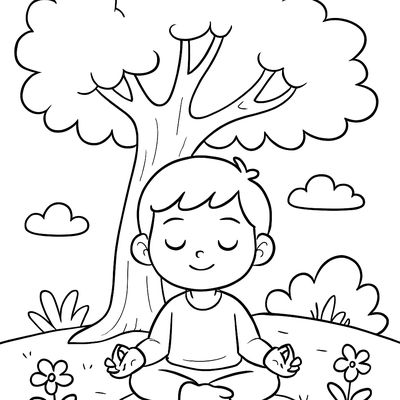
Brain-break pages. Keep a folder of calm-themed pages — meditation, nature, zen scenes — accessible after transitions or recess. Students who need to regulate self-select. Especially useful for kids with sensory or attention needs.
Pair-and-share repair pages. After a small conflict, give the two students involved the same "kindness" page to color side by side. The conversation that happens over coloring is often the actual repair.
Tie Pages Into the Bigger SEL Picture
Coloring isn't the whole program — it's the on-ramp. The American Academy of Pediatrics' Power of Play report notes that creative activities support self-regulation, working memory, and flexible thinking. When a parent or admin asks "why coloring?" — the page is the manipulative; the skills are the point.
Extend a single themed page: have students circle the feeling they felt most this week, layer a 2-minute breathing exercise onto a calm-body page, or start a real kindness jar after coloring one.
Build (or Borrow) a Themed Pack This Week
Pull 6–8 pages around one SEL focus, staple them into a paper booklet, and you've got a themed book your class can return to all month. For pre-built packs, ColorNest for Educators has free printables sorted by classroom use, and our calm-down corner roundup pairs neatly with the routines above.
Frequently Asked Questions
How often should I use SEL coloring pages?
Daily 2–5 minute morning check-ins work well; longer 15–20 minute sessions fit once or twice a week. Short and consistent beats one long lesson.
Do SEL coloring pages work for older elementary students?
Yes, with more sophisticated themes. Third- and fourth-graders respond well to nuanced emotion-wheel labels, identity self-portraits, and pages that double as writing prompts. Avoid baby-ish visuals at this age.
Can I use these pages with students who have IEPs or 504 plans?
Themed coloring pages are widely used as low-demand SEL tools for students with anxiety, ADHD, autism, or sensory needs. Always defer to the IEP team on specific accommodations.
What if a student doesn't want to color?
Don't force it. Offer it alongside quiet reading or a fidget. The point is regulation, not compliance — a student who opts out is practicing self-awareness.
Start With One Theme This Week
Pick one focus — feelings, self-regulation, friendship, or belonging — and print 5 themed pages. Run a 2-minute morning check-in for a week. By Friday you'll know whether your class needs more of the same, a new theme, or a deeper extension. Themed coloring books for social-emotional learning give your students one more reliable place to land when the day gets loud.
Browse ColorNest's free SEL coloring page library to build your first pack today.