How Coloring Pages Support Students with Anxiety or ADHD: A Teacher's Classroom Guide
Practical strategies for using coloring pages to support students with anxiety or ADHD — calming routines, self-regulation tools, and free printables for K–5.
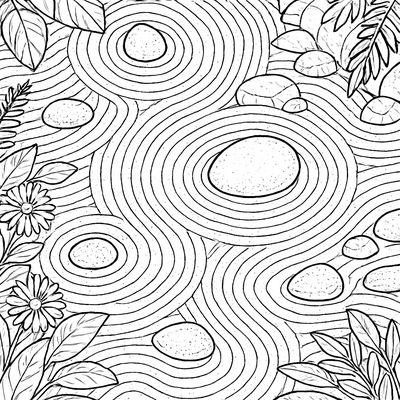
If you have ever watched a student spiral into a meltdown or struggle to come back from recess focused enough to learn, you know that "just sit down and try harder" is not a strategy. For many students the body needs a regulation tool before the brain can engage — and this is where coloring pages for students with anxiety or ADHD earn their place in your classroom toolkit. Not filler, but a deliberate, repeatable self-regulation routine your students can use without a word from you.
Why coloring works for students with anxiety or ADHD
Anxiety and ADHD show up in classrooms more often than most teacher prep programs prepare us for. The CDC's most recent data on children's mental health shows that anxiety affects roughly 1 in 11 children, and the CDC's overview of ADHD describes a condition that makes sustained attention, impulse control, and emotional regulation genuinely harder for affected students — not a question of effort.
Coloring helps because it does three things at once. It gives the hands a slow, repetitive motor task, which lowers physiological arousal the way other rhythmic activities (rocking, walking, breathing exercises) do. It narrows focus to a small visual field, which is a relief for an anxious mind scanning for threats and an ADHD brain pulled in twelve directions. And it asks for output but not performance — no right answer, no grade, no peer comparison.
It also pairs well with how children are wired to learn. The American Academy of Pediatrics writes about the power of play as a way children build self-regulation and executive function. A coloring page is play-adjacent: open-ended, child-directed, low-stakes — the recipe a dysregulated student needs.
When to reach for a coloring page
You will get more mileage out of coloring as a regulation tool if you treat it as a planned routine, not a reward or punishment. A few high-leverage moments:
- Morning transitions. For students who arrive already activated — rough drop-off, hard bus ride — a five-minute coloring entry routine lowers the floor before the day begins.
- Post-recess re-entry. Three to five minutes of coloring buys back the focus you would otherwise spend reminding kids to settle.
- After a hard task. Following a timed assessment or frustrating math block, a coloring break prevents stress from bleeding into the next subject.
- As an opt-in calm-down option. Stocking coloring sheets in your calm-down corner gives anxious students a non-verbal way to ask for what they need. (See our calm-down corner free printables guide for setup detail.)

How to set up a low-friction coloring station
The biggest reason coloring stations fail is friction. If a student has to ask permission, find supplies, and choose between forty options while dysregulated, the tool will not work. A few setup principles:
- Pre-print and pre-sort. Keep 10–15 ready-to-go pages within arm's reach of students, not in a teacher cabinet.
- Limit choice. Offer three to five rotating sheets. Too many options overwhelm an anxious learner.
- Use twistable colored pencils. Markers feel performative and dry out; twistables are quiet, mess-free, and last a school year.
- Time-box it. A visible 5-minute timer signals "this is a tool, not a vacation" and helps ADHD students trust the boundary.
- Skip the praise. Resist complimenting the finished page — the goal is regulation, not critique. A simple "ready to come back to math?" closes the loop.
Choosing pages that match the student
Not every coloring page lowers arousal. A page with thirty tiny details and ambiguous figures can frustrate a perfectionist student with anxiety. A page with huge open spaces can bore an ADHD student into abandoning it after a minute. A rough matching guide:
- For anxious or perfectionist students: medium-detail mandala and pattern pages work well. The symmetry is predictable, the boundaries are clear, and there is no "right" color order.
- For students with ADHD who fatigue quickly: larger illustrations with bold outlines (animals, vehicles, nature scenes) give faster visual payoff and keep them engaged through the full timer.
- For students processing big feelings: calm-relaxation scenes and pages tied to social-emotional learning themes double as quiet conversation prompts when the student is ready to talk.

Frequently Asked Questions
How long should a coloring break last in the classroom?
For most K–5 students, 3 to 7 minutes is the sweet spot — long enough for the nervous system to downshift, short enough that it doesn't become an avoidance strategy. Use a visible timer so the student knows the boundary in advance.
Is coloring a replacement for an IEP accommodation or therapy?
No. Coloring is a low-cost regulation routine that complements a student's formal support plan; it is not a substitute for accommodations, counseling, or clinical care. Loop in your school counselor, special education team, or family if a student's anxiety or ADHD symptoms are interfering with learning.
What if a student refuses to color?
Offer it, then drop it. Coercing a dysregulated student into a regulation tool tends to backfire. Keep the option visible; reluctant kids often opt in on day three or four once the room normalizes it.
Can older elementary students use coloring pages without feeling babied?
Yes. Zentangle designs, intricate mandalas, and pattern-heavy nature scenes feel more grown-up than cartoon characters and work well for 4th–5th graders. Frame it as a "focus reset," not a coloring break.
Bring the routine into your classroom this week
Pick one transition point — morning entry, post-recess, or after your hardest subject — and try a five-minute coloring routine for two weeks. Most teachers see the difference inside three days: faster re-engagement, fewer behavior redirects, and at least one student who looks visibly relieved to have a tool they can reach for on their own.
Browse the ColorNest library for free printable mandalas, calm-relaxation scenes, and SEL-themed pages you can pull into rotation tonight — no login, no paywall, no email required.