Coloring Pages for English Language Learners: A Teacher's Guide to Building Vocabulary
Coloring pages for English language learners turn vocabulary into visuals. A teacher's guide to building words, speaking, and writing in your ELL classroom.
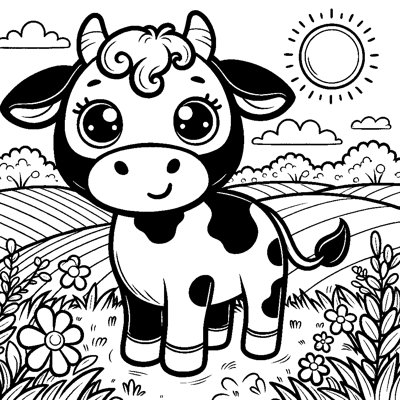
If you have multilingual students in your room, you know the daily puzzle: how do you teach content when a child is still building the words to access it? Coloring pages for English language learners are one of the simplest tools for that exact problem. A clear line drawing gives a newcomer a picture to attach a word to — no translation app required — while the rest of your lesson keeps moving.
This isn't busywork. Used on purpose, a single coloring page becomes a vocabulary anchor, a speaking prompt, and a low-pressure way for a silent-period student to show what they know. Here's how to make that happen in a regular classroom.
Why Coloring Pages for English Language Learners Work
English learners face a double challenge. Reading Rockets points out that the average native English speaker enters kindergarten knowing at least 5,000 words, while an ELL may know thousands of words in their home language but very few words in English — building the foundation and closing the gap at once.
Images shrink that gap fast. The same Reading Rockets guidance recommends labeling drawings and pictures so students connect oral and written English, then pointing to those visuals to clarify meaning. A coloring page is a ready-made version of that strategy: when a student colors a cow, hears you say "cow," and writes the word underneath, the picture, the sound, and the spelling lock together in one short task.
There's a second benefit for newcomers. A coloring page lets a student who isn't ready to speak still participate. Edutopia notes that for ELLs, illustrations and artistic work let newcomers in a silent period express themselves without the fear of presenting to the whole class — often the difference between a child shutting down and a child leaning in.
Build Vocabulary One Theme at a Time
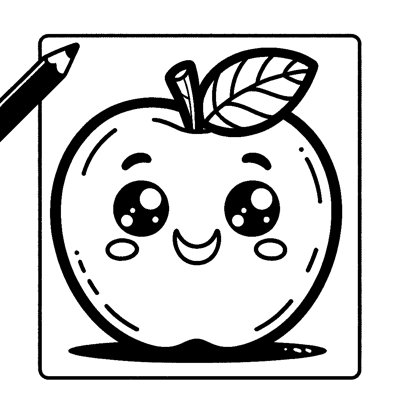
Group pages by theme instead of handing out random pictures. Pick a vocabulary set you're already teaching — farm animals, fruits and vegetables, classroom objects, weather — and pull matching pages. As students color, name each item aloud, have them repeat it, and write the word on the page.
Edutopia describes building students a "language toolbox": a notebook of illustrated vocabulary words organized by theme that they can flip through whenever they need a word. Colored pages slide right into that binder, so over a few weeks a student builds a personal picture dictionary they made themselves — far stickier than a printed list.
Cognates make this even more powerful for Spanish-speaking students. While they color, point out that the animal is elephant in English and elefante in Spanish. Reading Rockets notes that about 40% of English words have Spanish cognates, so a coloring session is a natural moment to build that bridge.
Pair Coloring With Speaking and Writing
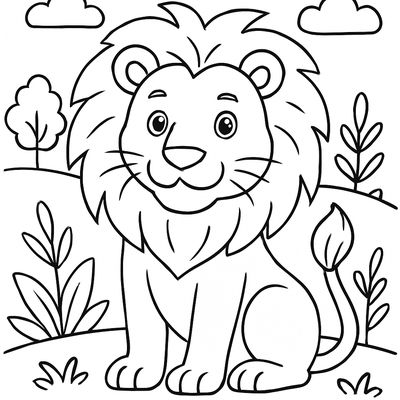
Coloring is the warm-up that makes harder language work feel safe. Once a page is colored, the picture becomes a prompt. Ask a beginner to name three things they see. Ask a more advanced student to write a sentence: "The lion has a big mane." The image carries the meaning, so students spend their energy producing English instead of decoding what's being asked.
A student who freezes during a cold-call question will often talk freely about the animal they just colored. Use partner talk: pair an ELL with a supportive classmate and let them describe their pages to each other before sharing with the group.
Low-Prep Ways to Add It to Your Routine
You don't need a new system. Drop a themed coloring page into routines you already run: a do-now during attendance, an early-finisher station, or the last five minutes before a transition. Keep a small stack tied to your current unit so the picture always reinforces that week's words.
Coloring earns its spot another way, too. NAEYC lists drawing and coloring with crayons among the activities that build fine motor skills children need for handwriting — so your ELL station strengthens pencil grip while it teaches vocabulary. For free, ready-to-print pages, ColorNest's animal coloring pages and food coloring pages are organized by category, making it a one-minute job to match a page to your unit. For a specific vocabulary set — say, a tools-and-trades theme for a newcomer group — the custom coloring book generator builds pages around exactly the words you're teaching.
Frequently Asked Questions
Are coloring pages too babyish for older English language learners?
Not if you frame them as vocabulary tools. Choose age-appropriate themes — sports, food, community places — and pair each page with a real writing task so it reads as language practice, not playtime.
How do coloring pages actually build English vocabulary?
They connect a word's sound, spelling, and meaning in one place. Coloring an object, hearing the word, and writing it down anchors new vocabulary far more durably than a word list alone.
What themes work best for ELL vocabulary?
High-frequency, concrete categories: animals, food, classroom objects, weather, family, and community helpers. These map to early language goals and give students words they can use the same day.
How much class time does this take?
As little as five minutes. Coloring pages fit do-now slots, early-finisher stations, and transition buffers without rebuilding your schedule.
A Small Tool for a Big Gap
Closing the vocabulary gap is long, patient work, and no single activity does it alone. But coloring pages for English language learners offer a rare combination: free, seconds to set up, and they meet a newcomer exactly where they are — at the picture, before the words. Add one this week, tie it to the vocabulary you're already teaching, and watch a quiet student start naming what they see.
Browse free, printable coloring pages for your classroom at ColorNest.