Coloring as a Brain Break: Why It Works and How to Implement It
A practical guide to using coloring as a classroom brain break — the cognitive research behind it, when to deploy it, and a 5-minute implementation routine for K–3 teachers.

You can feel a class lose its focus before you can name it — volume drops in odd places, two students pick at workbook edges, a third has been staring at the same page for ninety seconds. A well-placed coloring brain break — five quiet minutes with a printed page and a box of crayons — resets the room without the negotiation a longer transition demands. This post covers why coloring works as a brain break, what the research says, and a routine you can drop in tomorrow.
It's the classroom-wide companion to our calm-down corner self-regulation hub, which focuses on individual students using the same materials.
What a Brain Break Actually Does
A brain break is a short, intentional pause between cognitively demanding tasks. The point isn't entertainment — it's giving the prefrontal networks that handle sustained attention a few minutes to recover. Neurologist Judy Willis notes that neurotransmitters supporting attention can deplete after about ten minutes of the same kind of effort, and switching to a different brain network lets the original replenish. Edutopia's summary of the research is that periodic breaks improve focus, retention, and even test performance; without them, cognitive fatigue builds across the day.
For most K–3 classrooms, that's one short break every twenty to thirty minutes during academic blocks. The choice is what kind of break to deploy. Movement breaks are great when the room is sluggish. Coloring breaks are the opposite tool — for when the room is over-stimulated, transitioning out of an unstructured period, or about to enter a focus-heavy block.
Why Coloring Specifically

Coloring works as a calming break for two reasons. It occupies the visual-motor system with a repetitive, predictable task — choosing a color, following a line, choosing another color — which lets the executive-attention network rest. And structured patterns push that calming effect further. A 2005 study by Curry and Kasser, Can Coloring Mandalas Reduce Anxiety?, found that students who colored a mandala or plaid pattern after an anxiety-induction recovered significantly faster than students who colored freely on a blank page. The structure, not coloring alone, did the work.
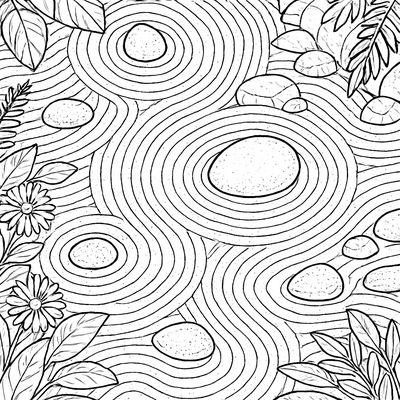
In practical terms, the page you choose matters. A page with a clear repeating pattern reliably produces the meditative effect; a character on a blank background is still calming, just less so. Save those for free-choice time.
Coloring breaks also double as fine-motor practice. The American Academy of Pediatrics' clinical report on the power of play notes that low-stakes creative activities build the same self-regulation, attention, and motor skills your lessons train.
A 5-Minute Brain Break Routine
The routine below assumes a K–2 classroom of about twenty students. Adjust the length up or down for older grades.
Materials. A bin of 25–30 pre-printed pattern pages, two caddies of crayons, a visible timer. Keep two sub-piles: simple mandalas for K–1, zentangle or nature-fractal pages for grades 2–3. Free pages for both bands live in our patterns and mandalas section and the calm and relaxation set.
The cue. One consistent signal — a chime, a light switch, a song clip — for "brain break, choose a page." The signal eliminates negotiation.
The five minutes. Set the timer, lights low, voices off. Students color whatever section they want — completion isn't the goal. Sit down and color a section yourself; modeling signals this is the activity, not a free-for-all.
The return. When the timer ends, ring the same cue and ask students to turn the page face-down. The page is theirs to finish later or take home. One clean instruction.
For a quieter variant, Edutopia's piece on silent brain breaks for early elementary pairs well with structured coloring.
When to Use a Coloring Break — And When Not To
Use a coloring break when the room is over-stimulated, transitioning out of recess or lunch, about to enter a writing or assessment block, or showing early signs of fatigue — rising volume, off-task fidgeting, repeated re-direction.
Skip it when the room is already sluggish; students zoning out need movement, not more sit-still time. And for individual students in a calm-down corner, a freer character page is often a better fit — the goal there is comfort, not focused stillness.
If you're reaching for the coloring break more than three times in a single morning, the schedule is the problem, not the students.
Frequently Asked Questions
How long should a coloring brain break be?
For K–2, five minutes is the sweet spot — long enough for the attention network to start replenishing, short enough that students don't slip into deep play. For grades 3 and up, seven to ten minutes works better.
Do I need to grade or collect the pages?
No. The pages aren't assessments. Collecting them changes the cognitive load and removes the restorative effect. Let students keep, take home, or recycle their pages.
What if some students refuse to color?
Offer a quiet alternative: a book, doodling on scratch paper, head down with eyes closed. The goal is the break, not the medium.
Are mandala pages too advanced for kindergarteners?
The simpler mandalas have bold lines, larger sections, and fewer elements — they're fine for K–1. Save the intricate zentangle designs for grade 2 and up.
Pulling It Together
A coloring brain break is one of the cheapest, most reliable classroom-management tools you can keep ready. Five minutes, a pattern page, a caddy of crayons, a consistent cue. The research supports it and most teachers find it pays back in focus for the next block.
For a ready-to-print stack, our free educational coloring pages and teachers landing page organize curriculum-aligned brain-break pages by complexity. Print twenty, slip them into a bin, and you're ready for tomorrow.