Alphabet and Counting Coloring Pages for Early Childhood Classrooms
How to use free alphabet and counting coloring pages in early childhood classrooms — letter-of-the-week rotations, cardinality work, centers, and brain breaks that fit a real schedule.
If you teach pre-K or kindergarten, you already know the two skills the year quietly turns on: knowing letters and knowing numbers. The pacing guide treats them as separate strands, but the room treats them as the same daily job — short, repeated, low-pressure reps a four- or five-year-old will actually sit through. That is exactly where alphabet and counting coloring pages earn their keep. Used well, they stack dozens of letter and number exposures into the parts of the day you already have, without adding a worksheet your students can smell coming.
This guide is for the teacher who wants those pages to do real instructional work — how to build an alphabet rotation, choose counting pages that build true number sense, and slot both into centers, transitions, and brain breaks.
Why Alphabet and Counting Coloring Pages Belong in the Daily Routine
The case for letter work is well documented. The National Early Literacy Panel found that alphabet knowledge is one of the single best predictors of later reading success, and Reading Rockets summarizes that research clearly. The catch is that it's built through volume: a child needs to see, name, and trace a letter many times before it sticks, and most schedules don't have room for that many discrete lessons.
A coloring page closes that gap by making the reps invisible. When a student colors the letter B alongside a butterfly and a ball, they say the letter name, hear the initial sound twice, and trace the form with crayon — three exposures folded into one quiet activity, with none of the resistance flashcards provoke.
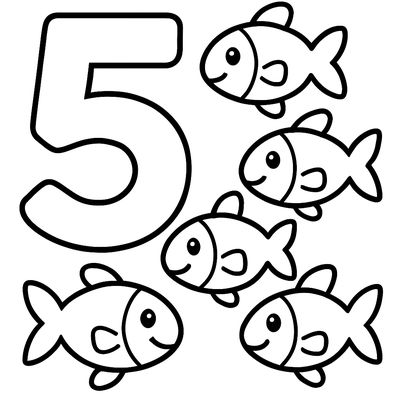
The same logic holds for numbers. As NAEYC points out, early math is not about rote drill but about children "actively making sense" of quantity in real situations. A page pairing the numeral 5 with five fish to count does exactly that — tying a symbol to a quantity the child can point to and tally.
Building an Alphabet Coloring Rotation
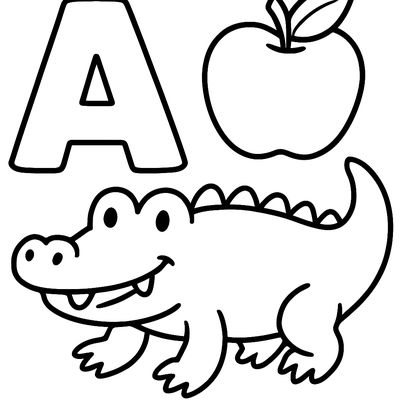
The familiar letter-of-the-week gets sharper with the right pages. Pick one anchor page per letter that pairs the letter with two objects starting with its sound — the letter A with an apple and an alligator is the model. Pin it to the wall Monday morning, point at it during transitions, and offer it as the seated quiet activity after recess. Ask one question while students color: "What sound does it start with?" The page does the rest.
For a student who needs a second pass on a tricky letter, pick a different page for the same letter — a new scene keeps the sound-symbol pairing fresh. Toward year's end, the full alphabet A to Z on a single page makes a strong review piece. Browse the complete set in the free alphabet and letters hub, and our guide to letter recognition activities for kindergarten lays out a full week to wrap around these pages.
Counting Pages That Build Cardinality, Not Just Tracing
Most number printables stop at the numeral — the child traces a 5 and moves on. That builds recognition, but the harder step is cardinality: knowing that 5 means five things. Choose pages that pair a numeral with that exact count of objects, so the eyes find the symbol, the mouth says the name, and the hands count the objects while coloring them in.
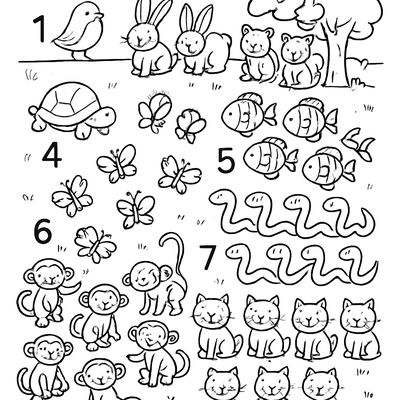
A useful sequence runs from single-number anchor pages up to counting scenes. The number 10 with ten ladybugs is the bridge where students start grouping as they count, and a counting scene with animals numbered 1 through 10 scaffolds the child who loses the thread past six. The trick is to color one item at a time in count order, so each turn reinforces both numeral and quantity — by the time the page is finished, the student has counted to ten several times over.
Slotting Both into Centers, Transitions, and Brain Breaks
These pages flex into three slots. As a center activity, set out a basket of letter and number pages and let students self-select — the choice keeps engagement high while the content stays on-standard. During transitions, a half-colored page is a ready "do this until we line up" task that fills the dead time where behavior usually slides. And as a brain break, mindful coloring is one of the calming activities Edutopia recommends for resetting young students after high-energy blocks. Because the page is academic, the break is never wasted time.
Frequently Asked Questions
What age are alphabet and counting coloring pages best for?
They work across the early childhood span. Toddlers and pre-K do well with single-letter and single-number anchor pages, while kindergarten and early first grade can handle full-alphabet sheets and counting scenes to twenty. Match the page to where the child is, not to the grade label.
How many letters or numbers should I cover in one week?
For an alphabet rotation, one letter per week is the standard pace. For counting, a number-of-the-day rotation through one to five works well early in the year, then stretch to ten and beyond as students gain confidence.
Do coloring pages actually teach, or just keep kids busy?
Used intentionally, they teach. A page that pairs a letter with its sound, or a numeral with the matching count of objects, gives multiple aligned exposures while the child colors — real learning that doesn't feel like a drill.
Are these coloring pages free for classroom use?
Yes. The full alphabet and counting libraries are free to browse and print, so you can build a rotation without a budget line.
Bring Letters and Numbers Into Your Week
Alphabet and counting coloring pages give early childhood teachers a rare two-for-one: the skills that matter most, in the format young students least resist. Start with one anchor page per letter and one number-of-the-day page, slot them into the routine you already run, and let repetition do its quiet work. Browse the free educational coloring pages collection to build your first rotation today.